Welcome to my web page. I hope this page will be of use to my students, prospective Harvard students, and anyone trying to figure out how to reach me or locate one of my publications. Below you will find information about:
- Me
- How to reach me
- The courses I teach
- My Books
- Recent Essays and Work in Progress
- Complete Writings
- Korsgaard Lectures you can hear on the web
- Students I have worked with
- Harvard’s Open Access Website, DASH, where you can find final drafts of many of my papers and links to versions available on the web.
- On this page below you will find my CV and information about how to contact me.
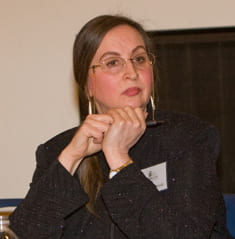
Christine M. Korsgaard
I am Arthur Kingsley Porter Research Professor of Philosophy at Harvard University, where I taught from 1991 until 2020. From July 1996 through June 2002, I was Chair of the Department of Philosophy. (The current chair is Bernhard Nickel). From 2004-2012, I was Director of Graduate Studies in Philosophy. (The current DGS is Mark Richard.) Before coming here, I held positions at Yale, the University of California at Santa Barbara, and the University of Chicago, as well as visiting positions at Berkeley and UCLA. I retired from teaching in June 2020. I served as President of the Eastern Division of the American Philosophical Association in 2008-2009, and held a Mellon Distinguished Achievement Award from 2006-2009. I work on moral philosophy and its history, practical reason, the nature of agency, personal identity, normativity, and the ethical relations between human beings and the other animals.
How to reach me:

Department of Philosophy
Harvard University
Cambridge, Massachusetts 02138
Department Phone: 617-495-2191
Department Fax: 617-495-2192
Department e-mail: phildept@fas.harvard.edu
At my own office:
205 Emerson Hall
Cell Phone: 617-599-0185
Via e-mail:
Christine_Korsgaard@Harvard.edu (That’s Christine_Korsgaard@Harvard.edu.)
My CV
My CV: